Many organizations believe they are prepared for an audit—until the audit is scheduled.
What follows is familiar: last-minute document reviews, conflicting answers, policy gaps, rushed remediation, and operational disruption. This is audit panic.
True audit readiness looks very different. It is calm, repeatable, and sustainable.
The difference is not effort. It is how compliance is embedded into daily operations and integrated across the organization.
Audit Panic: When Compliance Is Not Operationalized
Audit panic occurs when compliance is treated as a requirement to satisfy, rather than a system to operate.
Common indicators include:
- Policies that exist but are inconsistently executed
- Controls reliant on individual knowledge instead of defined processes
- Evidence created reactively instead of produced through normal operations
- High remediation costs and audit fatigue
- Leadership uncertainty about readiness until assessment time
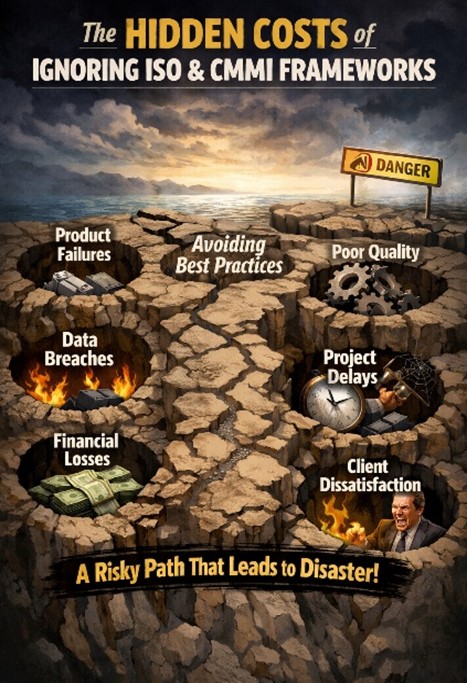
Organizations in this state may pass audits, but only through disruption and risk, and repeated fire drills.
Audit Readiness: The Outcome ISO And CMMI Are Designed to Deliver
Both ISO management systems and CMMI framework are designed to ensure that compliance is embedded, repeatable and sustainable.
Audit-ready organizations demonstrate:
- Clearly defined and consistently followed processes
- Ownership and accountability integrated across teams
- Objective evidence generated through daily execution
- Repeatability across programs, contracts, and personnel changes
- Confidence and predictability during audits
In these organizations, audits validate performance. They do not expose operational gaps.
Well-Implemented ISO and CMMI Practices Enable Multi-Audit Readiness
One of the most overlooked benefits of mature ISO and CMMI implementations is their ability to prepare organizations for a broad range of audits, assessments, and inspections without rebuilding compliance each time.
When ISO and CMMI practices are properly implemented:
- Records and evidence are produced as a byproduct of normal operations
- Documentation reflects how work is performed, not how it is described for an auditor
- Controls and governance mechanisms align naturally with multiple regulatory and contractual requirements
As a result, organizations can reuse policies, procedures, records, and objective evidence to support diverse audit types such as:
- CMMC assessments
- SOX audits
- DCAA audits
- Customer, regulatory and internal inspections
Rather than preparing separately for each audit, organizations operate within a single, disciplined compliance ecosystem that stands up to scrutiny across multiple frameworks.
How ISO Management Systems Embed Audit Readiness
ISO frameworks (such as ISO 9001, ISO 27001, and related standards) focus on ensuring that controls are integrated into how the organization operates, not layered on top.
- Consistent process execution across the organization
- Risk-based decision making embedded into planning and delivery
- Documented information that reflects real-world operations
- Management oversight that reinforces accountability and continuous improvement
When implemented correctly, ISO transforms audits from inspections into confirmations that your management system is functioning as intended.
How CMMI Strengthens and Sustains Audit Readiness
CMMI strengthens audit readiness by ensuring processes are not only defined but embedded into the execution and sustained over time. CMMI helps organizations:
- Integrate governance and measurement into operational workflows
- Maintain consistency across teams, programs, and contract growth
- Reduce compliance drift between audits
- Scale securely without recreating controls for each assessment
This eliminates one of the most common causes of audit panic: compliance degradation between assessments. By enforcing discipline, governance, and accountability, CMMI ensures that audit readiness is sustained even as contracts grow, teams expand, or priorities shift.
From Audit Events to Operational Maturity
Organizations that treat audits as events remain reactive. Organizations that implement ISO and CMMI together build:
- A unified operating model
- Predictable audit outcomes
- Reduced remediation and re-assessment costs
- Scalability across programs and customers
The focus shifts from preparing for audits to operating in control every day.
How ITG Helps Organizations Move from Panic to Preparedness
At Integration Technologies Group, Inc. (“ITG”), we help organizations integrate ISO and CMMI frameworks into a single, sustainable compliance and operational model.
Our approach enables you to:
- Align ISO and CMMI frameworks without duplication
- Embed governance, risk management, and accountability into daily operations
- Reuse policies, procedures, and evidence across multiple audits
- Reduce disruption while increasing audit confidence
Audit become confirmation not a disruption.
Takeaway
Audit panic is a symptom of fragile compliance. Audit readiness is the result of compliance that is embedded, integrated and sustained.
- ISO provides structure and control
- CMMI ensures discipline and sustainability
Together, they transform audits from high-risk events into predictable milestones.
Ready to Replace Audit Panic with Audit Confidence?
Let’s build a compliance and maturity model that works every day not just when the auditor calls. Contact Integration Technologies Group, Inc. (“ITG”) to learn how ISO and CMMI can help your organization reduce risk, lower cost, and scale with confidence.